
Bellatrix's Fanatical Service
Harry Potter and the Half-Blood PrinceBellatrix remains a loyal Death Eater, taunting Harry and defending Voldemort, while also showing distrust of Snape.
increasing Bearing strength in each event
 decreasing
Bearing strength in each eventdecreasingSuspicion of Snape
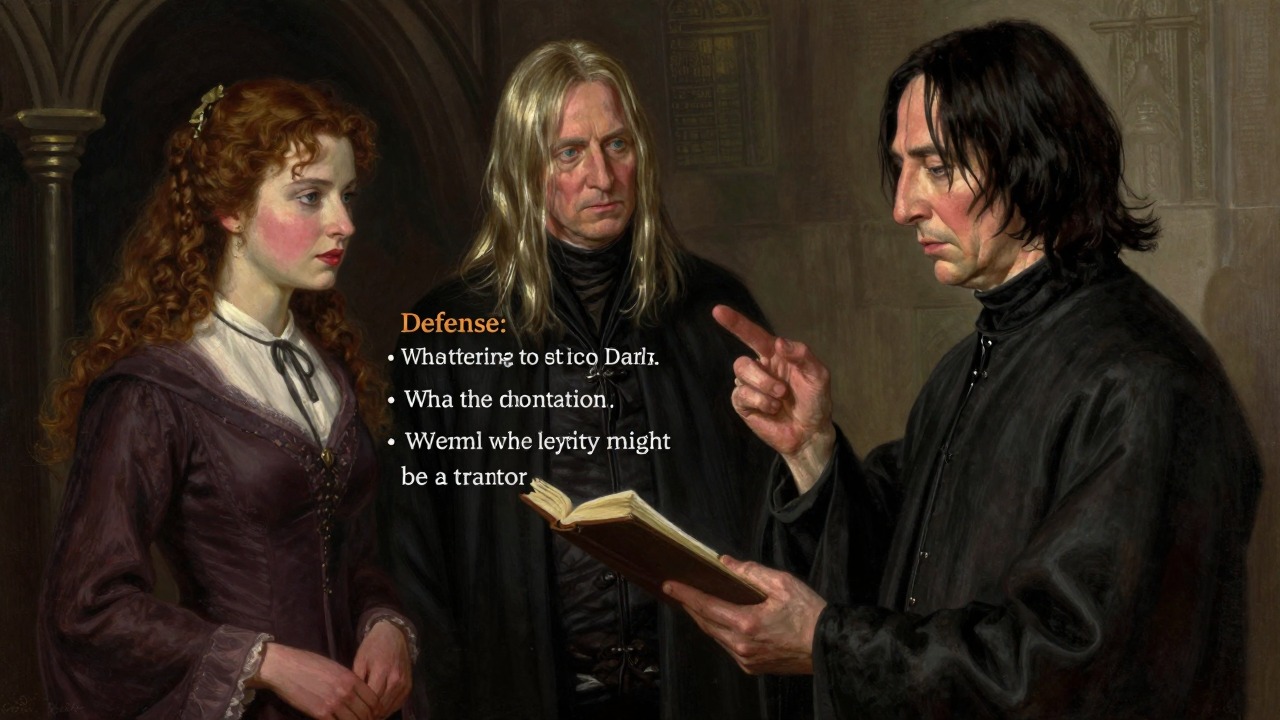
The Interrogation
The Confrontation
Bellatrix Lestrange accompanies her sister Narcissa to Spinner's End. She openly distrusts Severus Snape, questioning his loyalty to the Dark Lord. She lists reasons why Snape might be a traitor.
The Defense
Snape calmly defends himself, explaining his actions over the years. He claims to have been following Dumbledore's orders to maintain his cover. Bellatrix is not fully convinced, but she cannot prove anything.
The Tension
Bellatrix's hostility towards Snape is palpable. She is fiercely loyal to Voldemort and sees anyone else as suspect. Her presence adds tension to the meeting, and she remains a threat to Snape.
The Attack on Sirius

The Murder of Sirius
The Battle
Bellatrix was the one who killed Sirius Black in the battle at the Ministry. She laughs about it, showing no remorse. Harry Potter is haunted by this memory.
The Taunts
Throughout the year, Bellatrix's actions are a source of grief for Harry. He hates her with a passion. She becomes a symbol of the Death Eaters' cruelty.
The Continued Threat
Bellatrix remains at large, serving Voldemort. She is a dangerous enemy, skilled in Dark Magic. Her fanaticism makes her unpredictable.
The Astronomy Tower Battle

The Invasion
The Fight
Bellatrix is among the Death Eaters who infiltrate Hogwarts. She fights fiercely, casting curses at the Order members. She is determined to help Draco succeed.
The Escape
After Dumbledore's death, Bellatrix flees with the other Death Eaters. She is triumphant, believing that Voldemort will soon be victorious. Her loyalty is unwavering.
The Aftermath
Bellatrix remains a fugitive, but her influence is felt. She is a key lieutenant in Voldemort's army. Harry knows that he will have to face her again.
early July, at Spinner's End
previous year, but referenced often
late June, the night of the invasion
